Your GenAI feature returned a 200. The model did indeed return text to the user. But was the answer any good?
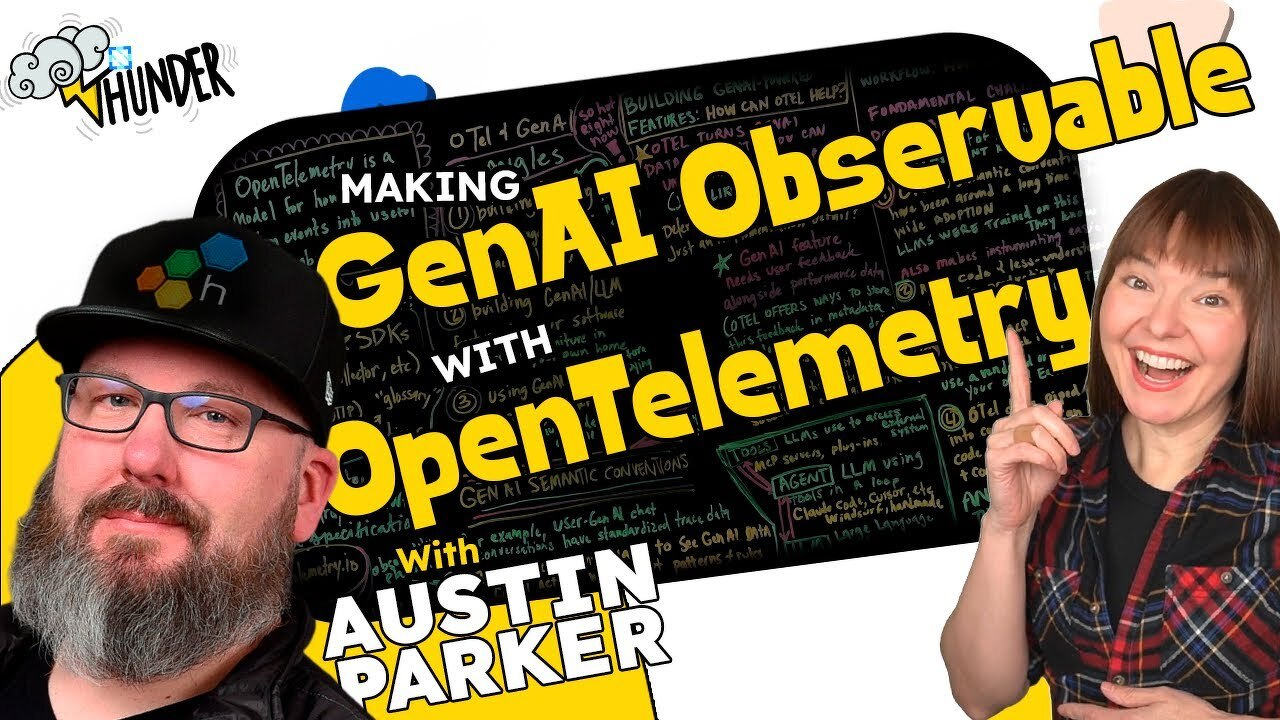
In this 🌩️ Thunder episode, Austin Parker (Director of Open Source at Honeycomb) explains why traditional observability falls short for GenAI. With deterministic software, success is binary: it worked or it didn’t. With GenAI, a successful HTTP response tells you nothing about whether users are actually happy.
Austin covers how OpenTelemetry’s semantic conventions let you combine user feedback (thumbs up, thumbs down) with performance data (token counts, model, cost) in the same telemetry. He also talks about “architectural blindness” in coding agents and how feeding trace data back into your agent helps it understand your system’s execution paths.
Watch now → youtu.be/RNaa_48LW…