Kubernetes clusters can carry hidden security issues in infrastructure config, workload settings, RBAC permissions, and containers.

Kubescape maintainer Ben Hirschberg joined me on 🌩️Thunder to explain how Kubescape scans a cluster across five dimensions and surfaces what’s wrong and how to fix it.

It checks infrastructure, workload, and RBAC configuration against OPA-based policies (things like unencrypted secrets or containers running as root), catches vulnerabilities with Grype, and watches runtime behavior with eBPF, then provides recommendations about what to fix first for maximum impact.

Watch here: youtu.be/z008cHQDA…
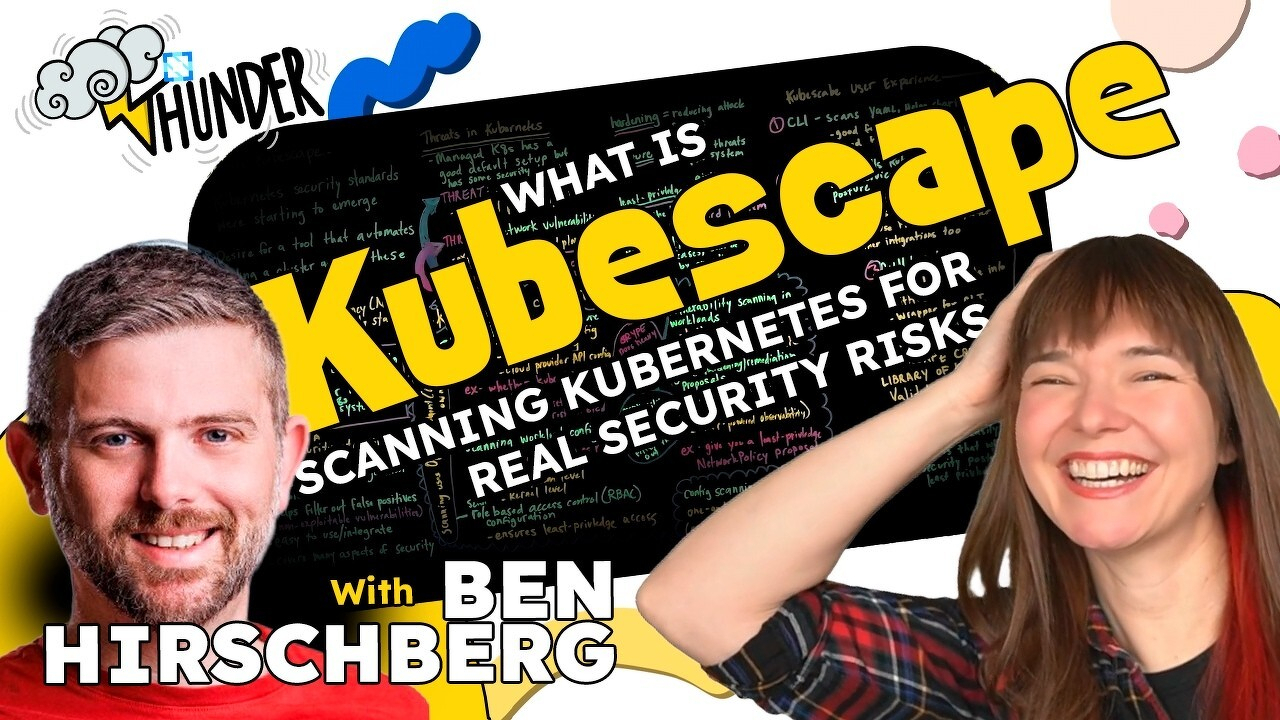
Thunder episode thumbnail. On the left, Ben Hirschberg, a man with short graying brown hair and a beard, wearing a red shirt, smiling at the camera. On the right, Whitney Lee, a woman with reddish-brown hair, wearing a black top under a red and black plaid flannel shirt, laughing with one hand in her hair. Between them, a black rounded rectangle showing a lightboard covered in handwritten white and teal notes and diagrams. Large yellow bold text reads "What Is Kubescape" and below it "Scanning Kubernetes for Real Security Risks." Yellow and white text at the bottom left reads "with Ben Hirschberg." The Thunder logo (a cloud with a lightning bolt) appears in the top left corner.